
The Confederation of All India Traders projected ₹6.5 lakh crore in business during a single 45-day Indian wedding season between 1 November and 14 December 2025. Gift items represented an estimated 4% of that expenditure—approximately ₹26,000 crore.
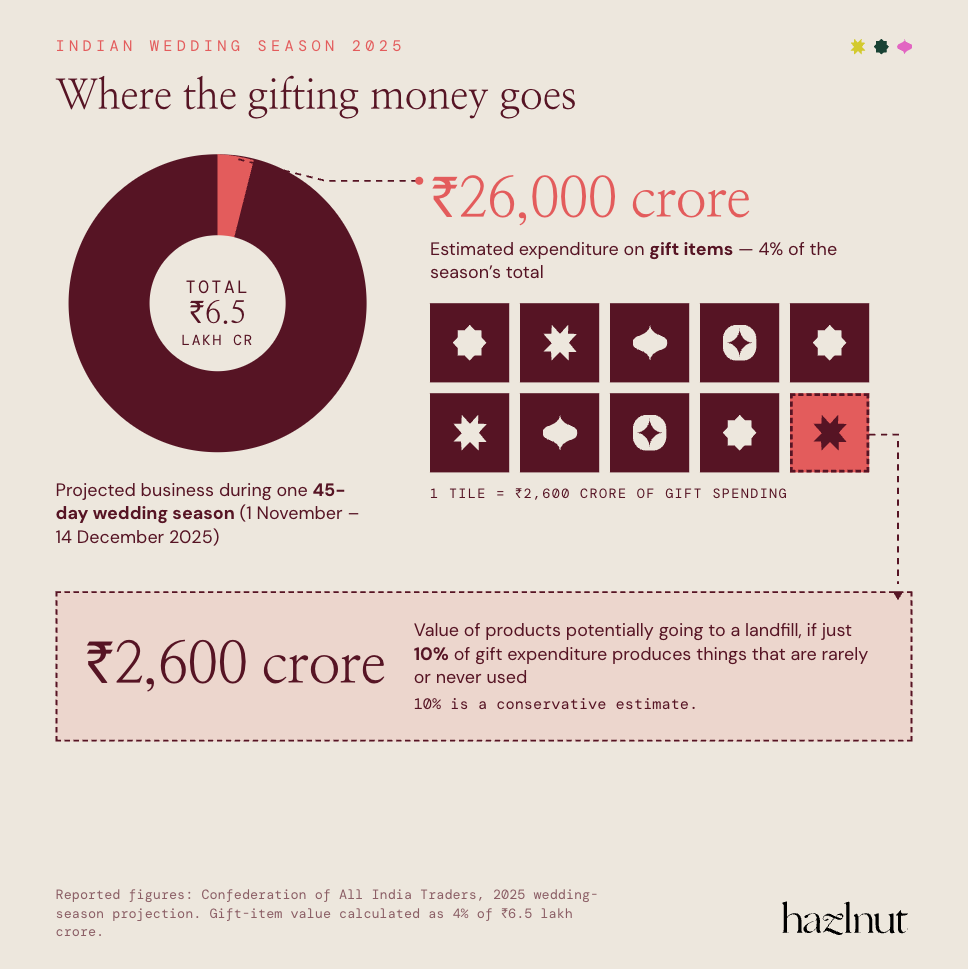
We do not yet have a reliable estimate of how many wedding gifts go unused. But to understand the scale, consider a deliberately conservative scenario: if just one in ten gifts (10%) is never meaningfully used, ₹2,600 crore of value has been spent creating, packaging, transporting and storing things that add little or no value.
Most of us have seen the problem in our own families. Cupboards contain unopened photo frames, unused décor, duplicate appliances and dinner sets waiting to be regifted. Every item began as a generous gesture. The waste was not caused by a lack of thoughtfulness. It was created by a lack of useful information.
Waste begins long before the bin
Environmental discussions often focus on what happens after we throw something away: recycling, disposal and landfill. But by then, much of the environmental cost has already been incurred.
Raw materials have been extracted. Products have been manufactured. Energy has been used. Packaging has been made. The gift has travelled through warehouses, shops and delivery networks before reaching the wedding.
In wedding gifting, the environmental cost of an unwanted gift begins long before it reaches a bin. It begins when a guest buys something without enough information about the couple’s preferences, needs or circumstances.
This is especially common in Indian weddings. Guests want to arrive with something respectful and generous. Couples often feel uncomfortable telling people what they need. In the space between those two good intentions, everyone guesses and waste is produced.
The answer is not less generosity
The answer is not to make weddings less generous. It is to help the same generosity produce more value.
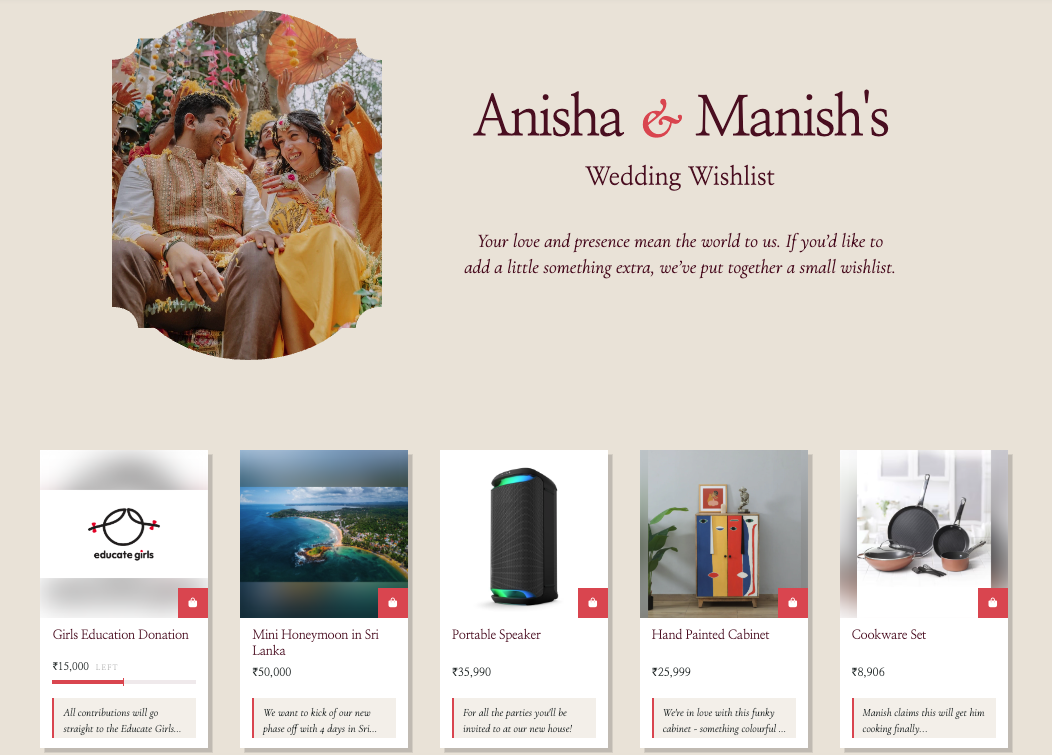
A wedding wishlist or gift registry gives guests information without turning gifting into a transaction. The couple shares a selection of things that would genuinely suit their life. Guests still choose what they would like to give. They can also contribute together toward something larger.
The emotional meaning of the gift remains. The guesswork does not.
What the same budget could become
The money that might have bought a never-to-be-used decorative bowl could instead become:
-
 One item the couple will use for ten years.
-
 A contribution toward a larger, better-quality product.
-
 An experience the couple will remember.
-
 Part of a honeymoon or new-home fund.
-
 A gift chosen specifically for the couple’s lifestyle.
This is a simple shift, but it changes the environmental outcome. Fewer unwanted products are manufactured, packaged, transported, stored and eventually discarded. The same amount of generosity creates more utility, more memory and less clutter.
Better information is waste prevention
Sustainability can sometimes feel like a request to do less: buy less, celebrate less, give less. Wedding gifting points toward a more practical idea.
Better information can reduce waste without reducing celebration.
When couples communicate what would genuinely help them, guests are not being told exactly what to buy. They are being given the context to make a thoughtful choice. That context can turn several duplicate gifts into one product that lasts, or redirect money from short-lived objects toward a shared experience or a new-home fund.
Gift registries are therefore not only a matter of convenience. They are a simple form of coordination—and coordination is one of the easiest ways to prevent waste upstream.
Thoughtful gestures should land in the right place
The cupboards full of unused wedding gifts are not proof that people do not care. They are proof that good intentions need good information.
That is why we are building Hazlnut: to replace guesswork with better information and help every thoughtful gesture land in the right place and not in a landfill.
Couples can create one wishlist, add items from different stores or create funds, and share a single link. Guests can choose a gift or contribute toward something bigger. The result is less duplication, less awkwardness and less waste without asking anyone to be less generous.
See it in action
Make thoughtful gifting easier
See how one shared wishlist can give guests helpful context, or start putting together one of your own.
Thoughtful gifting should create value for the people receiving it, not another unopened box.